From Point Clouds to Single Tree Details
Made for Forests. Made for Trees.
When it comes to analyzing forests and vegetation, LiDAR data is hard to beat - especially when you need detailed information about individual trees. This is where terrestrial laser scanning (TLS) truly shines.
Imagine automatically reconstructing the wooden structure of your forest: generating detailed 3D models of individual trees, counting branches per trunk, analyzing branch angles and diameters, or even dividing a tree into sawmill-ready logs complete with sweep classes.
TLS is also ideal for documenting remarkable or historic trees. Whether you’re working on an architectural project or a visualization workflow, you can generate accurate, ready-to-use 3D tree models that integrate seamlessly into your existing design tools.
In this post, we’ll show how LIS Pro 3D helps you explore TLS data in depth - transforming millions of laser points into the key metrics and 3D formats you actually need.
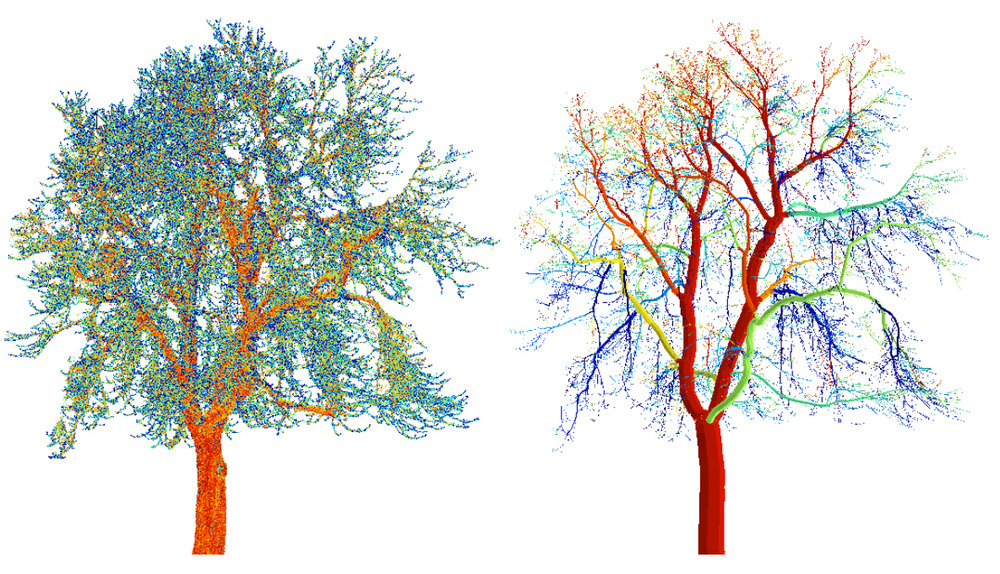
Everything Starts with Classification
A TLS point cloud captures forests in incredible detail - but at first glance, it’s still just a dense mass of points. Trunks, branches, and ground are all there, yet nothing is clearly separated.
This is where LIS Pro 3D brings structure to the data. Through classification, it distinguishes ground, stems, branches, and surrounding vegetation, assigning meaningful attributes to each point. What starts as raw scan data quickly becomes an organized, analysis-ready representation.
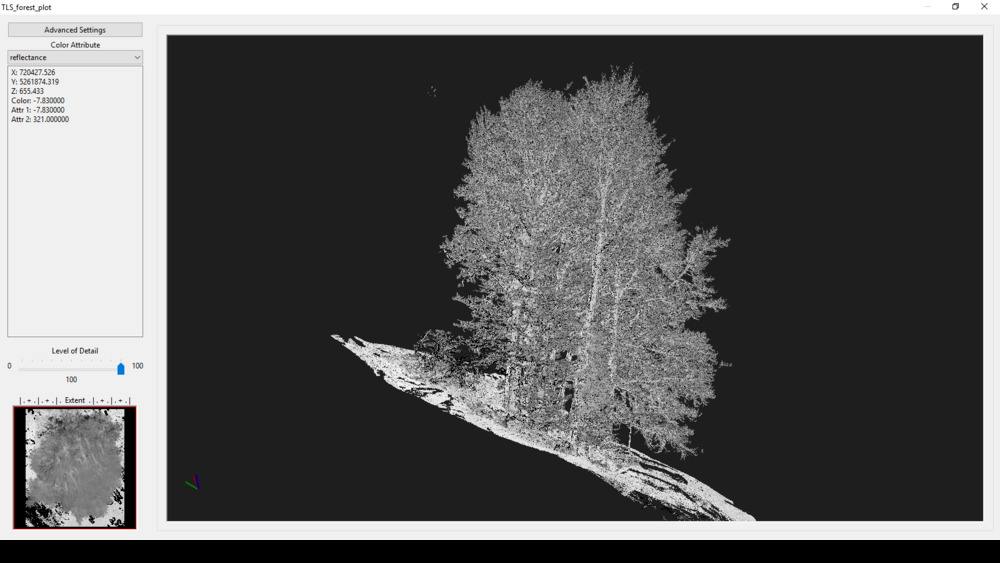
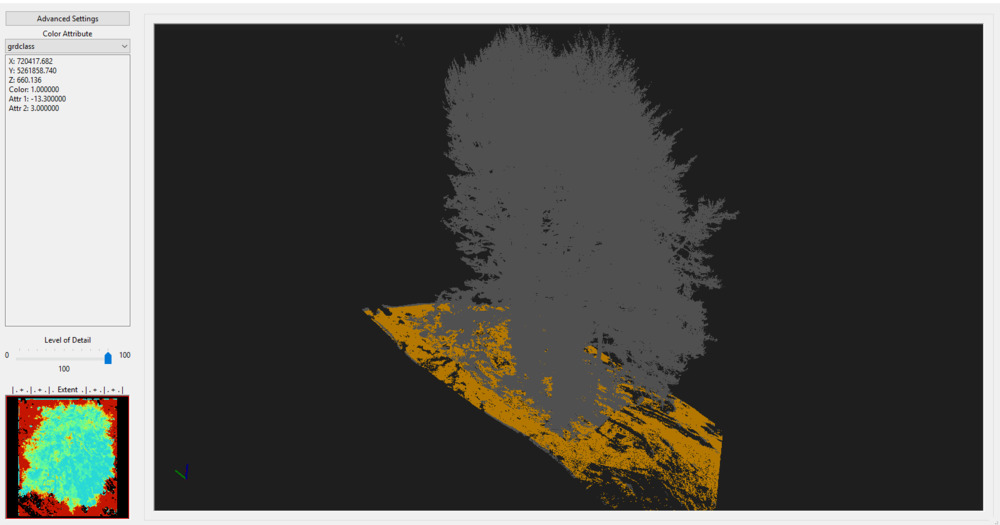
Separate Your Trees
With classification in place, you can now take full advantage of the height-above-ground values automatically derived from the data.
By analyzing a horizontal slice of the point cloud at breast height, you can reliably extract tree stems and estimate their diameters - a key input for forest inventory.
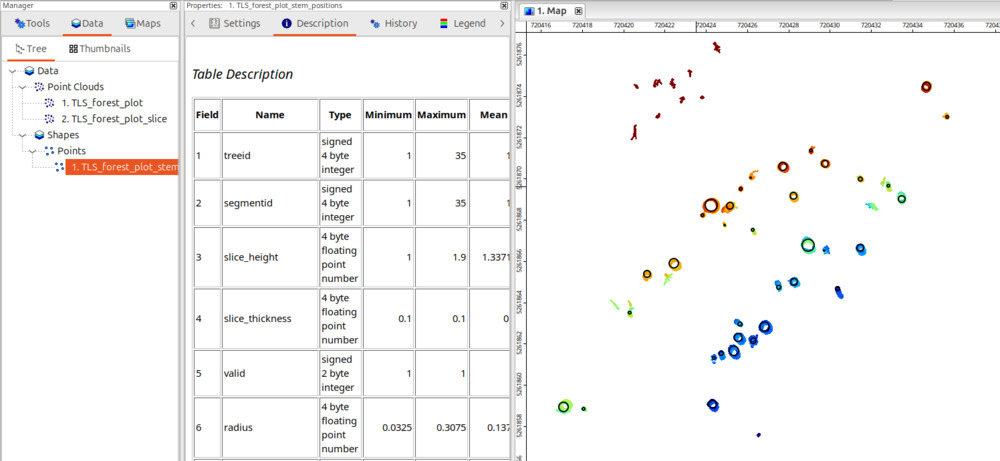
Building on this, LIS Pro 3D combines stem information with the classified point cloud to identify individual trees. By linking diameter and tree height, you can complete your inventory and derive robust allometric relationships.
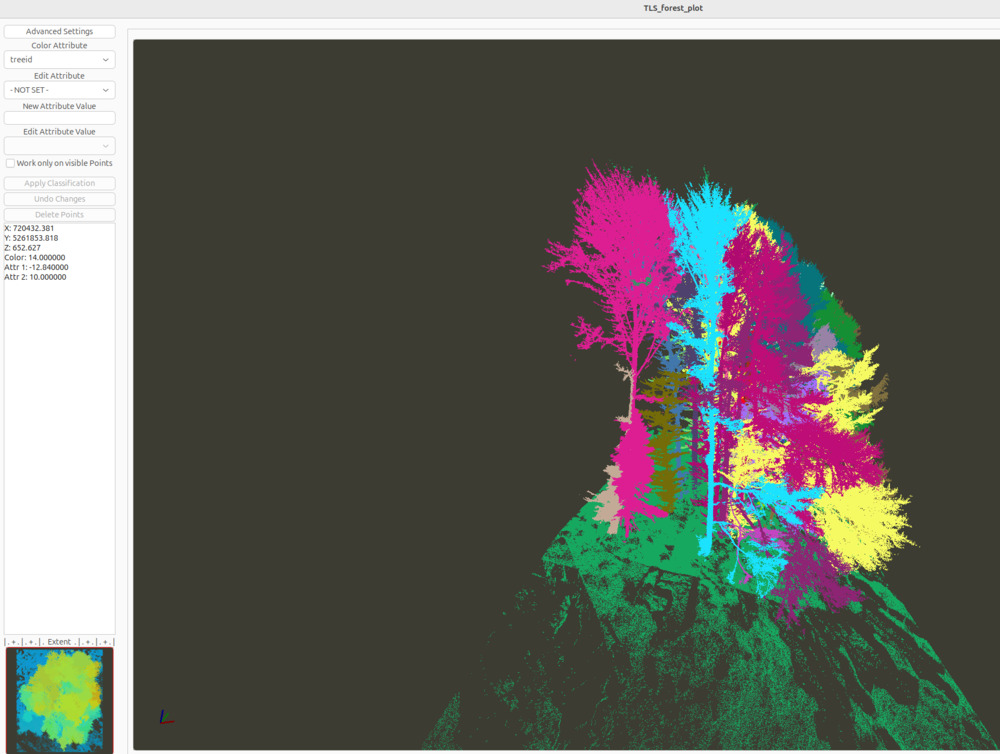
With LIS Pro 3D, segmented trees become clearly defined objects you can analyze, visualize, and use for inventory and planning tasks.
The Decisive Step - Build Your Tree Models
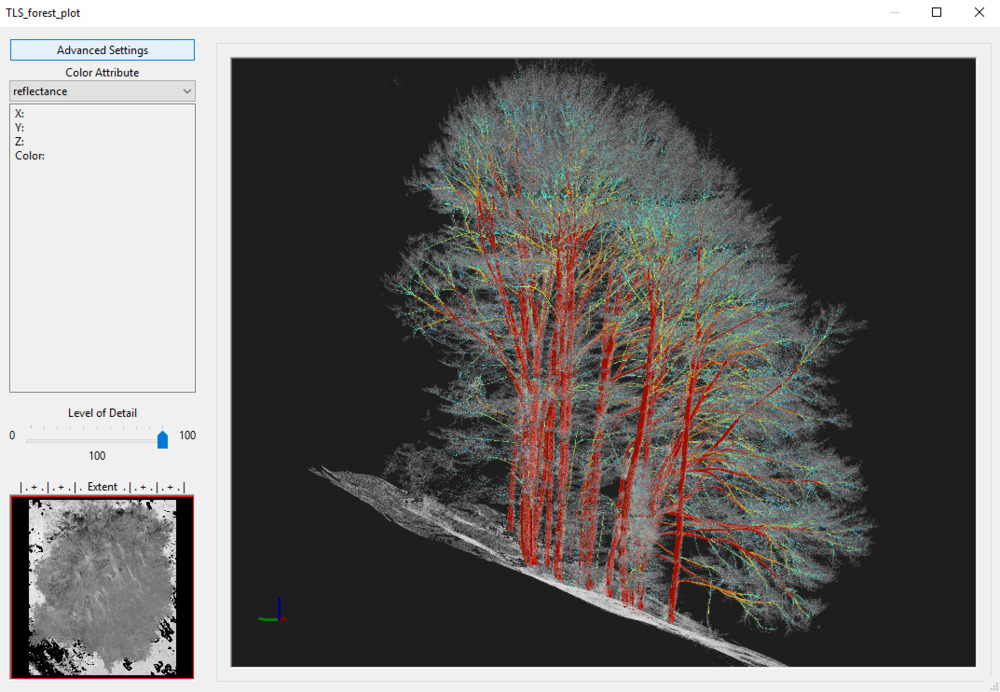
All previous steps prepare the ground. The real level of detail comes from 3D tree models derived from the classified TLS data.
With LIS Pro 3D, each tree is processed automatically to reconstruct its branching structure. The result is a clean, easy-to-analyze data model - one entry per branch, including branch diameter, volume, and orientation.
For timber and sawmill applications, these models go even further: LIS Pro 3D can propose optimal log segmentation, helping maximize log length and wood quality before a tree is ever cut.
Start Learning Today
Explore the forestry tutorial section and see how easy it is to go from raw point cloud data to forest inventory data.
- Request your free LIS Pro 3D trial here
- Get started with our TLS Forestry tutorial